

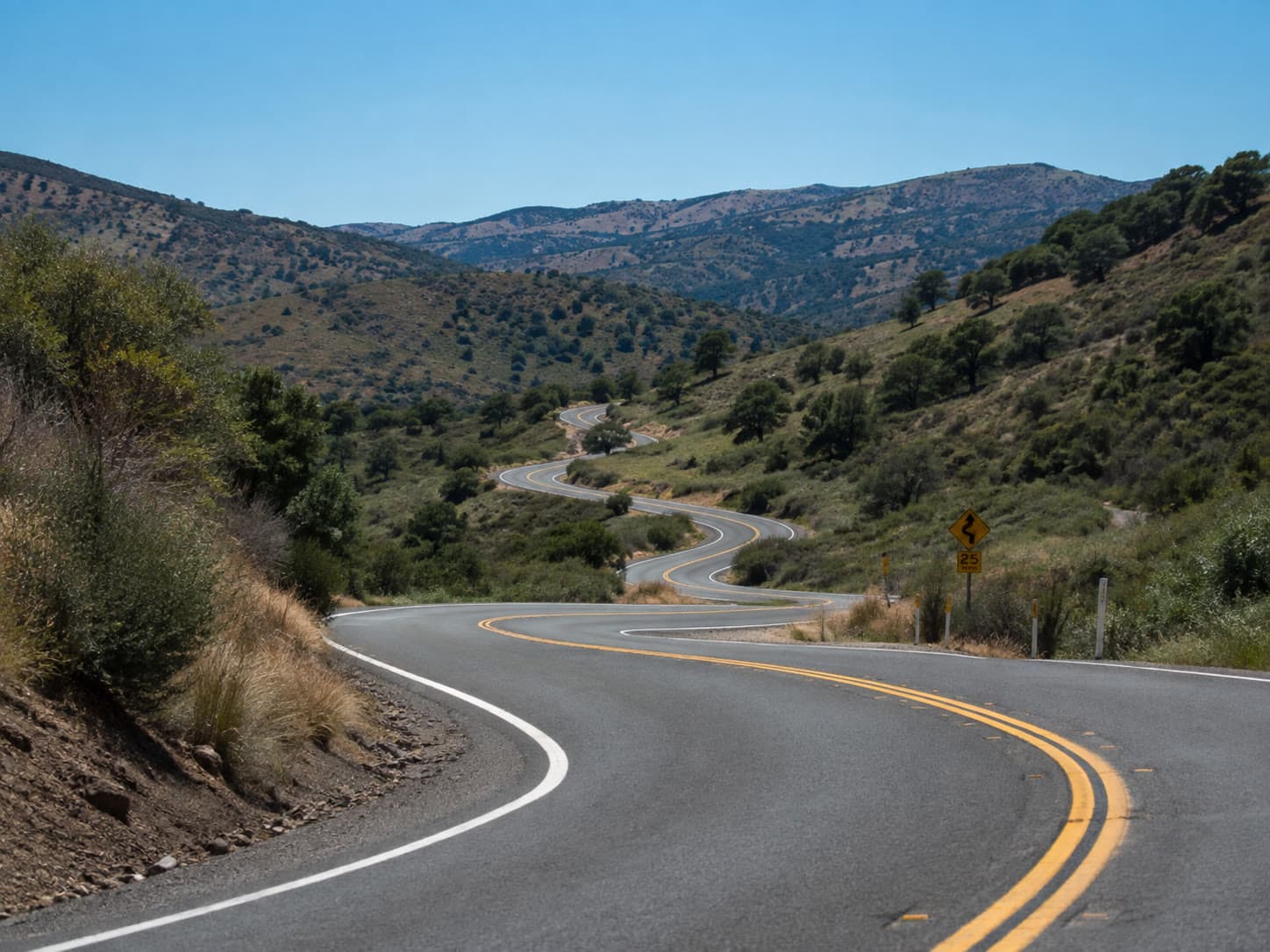
Croatia’s motorway network makes long distances easy. The interesting driving sits on the older roads that climb ridges, follow the Adriatic edge or cut through karst and forest. Those roads change character by season: summer crowds and heat on the coast, autumn clarity inland, winter wind and ice on exposed passes.
This guide is a shortlist of route types and named corridors rather than a catalogue of every hairpin. Use it to choose a region for the day, then refine the line on a map with terrain, fuel and an exit plan.
Match the route to the day you actually have
Start with weather and wind, not with Instagram. The bura can close bridges and make exposed coastal and mountain roads unpleasant or unsafe; summer afternoons bring tourist traffic, cyclists and slow local buses on the same narrow carriageway. Inland forest routes in Gorski Kotar feel different after rain than after a dry week.
Decide whether you want a coastal edge, an inland loop or a mountain climb with a clear descent. Build a fuel stop and a shorter alternative into the plan. On popular summer weekends, leave earlier than feels necessary—many of these roads share space with visitors who are not there to drive.
- Check wind warnings and mountain road status before you leave.
- Prefer morning starts on coastal and Biokovo approaches in high season.
- Carry offline maps where coverage drops in hinterland valleys.
Istria and the Učka rim
Istria mixes inland ridge roads, hill-town approaches and glimpses of the sea. The roads around Motovun, Grožnjan and the central peninsula reward patience: medium-radius corners, vineyard and oak scenery, and villages that ask for low speed. Link a few of those sections rather than chasing one famous hairpin.
Toward the east, Učka changes the mood. The climb toward Vojak and the roads that negotiate the massif give elevation, views across Kvarner and a clearer sense of terrain than the flatter west. Expect cyclists, variable surface quality and sudden fog. Pair an inland Istrian loop with a controlled Učka section only if time and weather agree.
Gorski Kotar forest loops
North of Rijeka, Gorski Kotar is Croatia’s cool, green contrast to the coast. Roads through Delnice, Čabar and the surrounding forests offer rhythm without constant tourist density: linked bends, shade, elevation changes and enough straights to breathe. It is one of the best regions for a full day that never needs the Adriatic.
Surface and logging traffic matter more here than postcard views. Wet leaves, shade ice in winter and slower local vehicles are part of the route. Use terrain shading on the map to find the ridge and valley lines that keep the drive coherent instead of stitching random connectors.
- Strong choice for spring, early summer and autumn.
- Plan fuel before committing to longer forest stretches.
- Treat winter as a different sport—check conditions explicitly.
Velebit hinterland and the northern Adriatic edge
Velebit separates the coast from the interior with character. Approaches toward Paklenica, routes above the northern Dalmatian edge and older links away from the motorway give long views, exposed corners and a sense of scale. The Jadranska magistrala remains useful for linking towns, but the more interesting driving often sits one layer inland or on carefully chosen coastal sections outside peak congestion.
Wind is the deciding factor. On a calm, clear day these roads are among Croatia’s most dramatic; in a strong bura they are a poor place to prove a point. Build the day so you can drop to a sheltered inland alternative without rewriting the whole itinerary.
Biokovo above the Makarska Riviera
The Biokovo Nature Park road is a headline scenic climb: tight, steep and spectacular when open and conditions are right. It is also a managed, fee-based access road with rules, weather closures and limited places to pass. Treat it as a planned ascent and descent, not as an improvised shortcut between coastal towns.
Below Biokovo, the Makarska Riviera road is beautiful and often busy. Pair a short coastal link with the mountain road only when you have time to drive Biokovo carefully and return before conditions change. Heat, tourist traffic and limited run-off demand restraint more than pace.
- Confirm Biokovo opening hours, tickets and weather before climbing.
- Keep speeds appropriate for blind corners and shared use.
- Have a coastal-only backup if the mountain road is closed.
Pelješac and the southern peninsulas
Pelješac offers a different Adriatic character: a long peninsula spine, wine country, views toward Korčula and approaches to Ston. The best driving is usually a deliberate out-and-back or a loop that includes a pause, not a race to stitch every coastal village into one unbroken corner sequence.
Further south and on the islands, ferries and seasonal traffic reshape the day. A scenic island road can be excellent in May and exhausting in late July. If the plan depends on a ferry slot, treat that slot as fixed and build the driving inside it rather than hoping the queue cooperates.
Turn a shortlist into a workable day
Pick one region and do it well. A coherent Istrian inland loop or a Gorski Kotar day beats a rushed motorway dash between three famous viewpoints. Add one headline section—Učka, Biokovo, a Velebit approach—only when the weather and timing support it.
Before you leave, confirm fuel, food, parking discipline in village centres and a realistic return time. After the drive, note which segments were worth repeating and which were spoiled by traffic or surface. That record is how a country full of good roads becomes a personal set of reliable routes.